The NV-RDAC's goal is to identify and eliminate obstacles and inform policymakers
A rare disease is defined as a condition or disorder that affects fewer than 200,000 individuals in the United States. There are approximately 7,000 rare diseases and 25–30 million Americans are affected by these rare disorders. While individuals with certain disorders may be rare, the total number of people with a rare diseases is large.
Information and resources are limited for these individuals and their families creating a myriad of challenges. Obstacles include delayed diagnosis, misdiagnosis, lack of treatment options, high medical care costs, and limited access to medical specialists.
The NV-RDAC has been established to provide an in-depth understanding for government officials and policymakers. The goal is to address barriers preventing individuals living with rare diseases from obtaining proper treatment, resources, and care for their condition.
What the NV-RDAC does for Nevadans
Analyzes burden and impact
Examines incidence, causes, and economic burden in Nevada
Gathers input and testimony
Receives reports and testimony from people, providers, and local/national orgs
Raises public awareness
Increases awareness of the burden of rare diseases in Nevada
Discovers evidence-based strategies
Identifies evidence-based strategies to prevent and control rare diseases
Understands the impact of delayed care
Determines the effect of delayed/inappropriate treatment on quality of life for patients and Nevada's economy
Makes the case for early treatment and access
Studies how early treatment affects quality of life, services, and reimbursement
Educates providers
Increases provider awareness of rare disease symptoms and care
Improves care delivery
Evaluates care delivery systems and recommends ways to improve survival and quality of life
Builds better data
Finds effective data-collection methods for epidemiological studies
Charts a statewide plan
Establishes a comprehensive statewide plan spanning health authorities, public/private orgs, businesses, and funding sources
Creates a rare disease registry
Develops a registry to identify genetic and environmental factors
Reports annually
Compiles an annual report with activities and policy/legislative recommendations
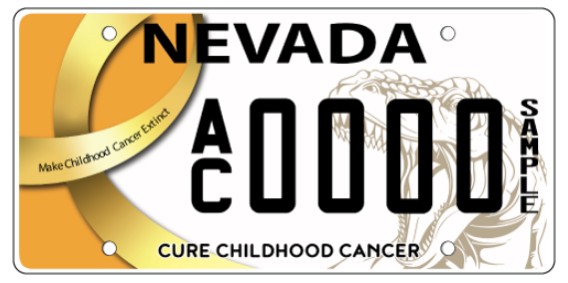
Show your support at
your local DMV.
The Nevada DMV offers a specialized license plate that supports the NV-RDAC as well as research and treatment for childhood cancer.