Key Takeaways
- Three streams of evidence, one picture. For the first time, the Council combined patient and family survey responses, a statewide provider survey, and statewide clinical data into a single account of what rare disease care in Nevada actually looks like.
- Diagnosis takes years, even for very young children. More than a third of responding families waited over a year for a diagnosis and one in seven waited more than five years, in a cohort whose average age is under four.
- Providers are absorbing the system’s gaps. A majority of responding Nevada professionals said they spend more than half of their clinical time on care coordination, and they reported that fewer than half of rare disease prior authorization requests are approved on the first attempt.
- Near-consensus support for a Center of Excellence. 82 percent of the 69 responding providers, across primary care, specialty care, nursing, pharmacy, genetics, and social work, supported establishing a comprehensive rare disease Center of Excellence in Nevada. One opposed.
- Insurance type changes the shape of the failure. Medicaid-insured families reported provider unfamiliarity with their condition at more than twice the rate of privately insured families. Privately insured families reported care coordination breakdowns at twice the Medicaid rate.
- The complete report arrives in February 2027. The full three-year report is timed to Nevada’s next legislative session and will include the adult and Northern Nevada voices the Council is still working to reach.
A note from the Chair of the Nevada Rare Disease Advisory Council:
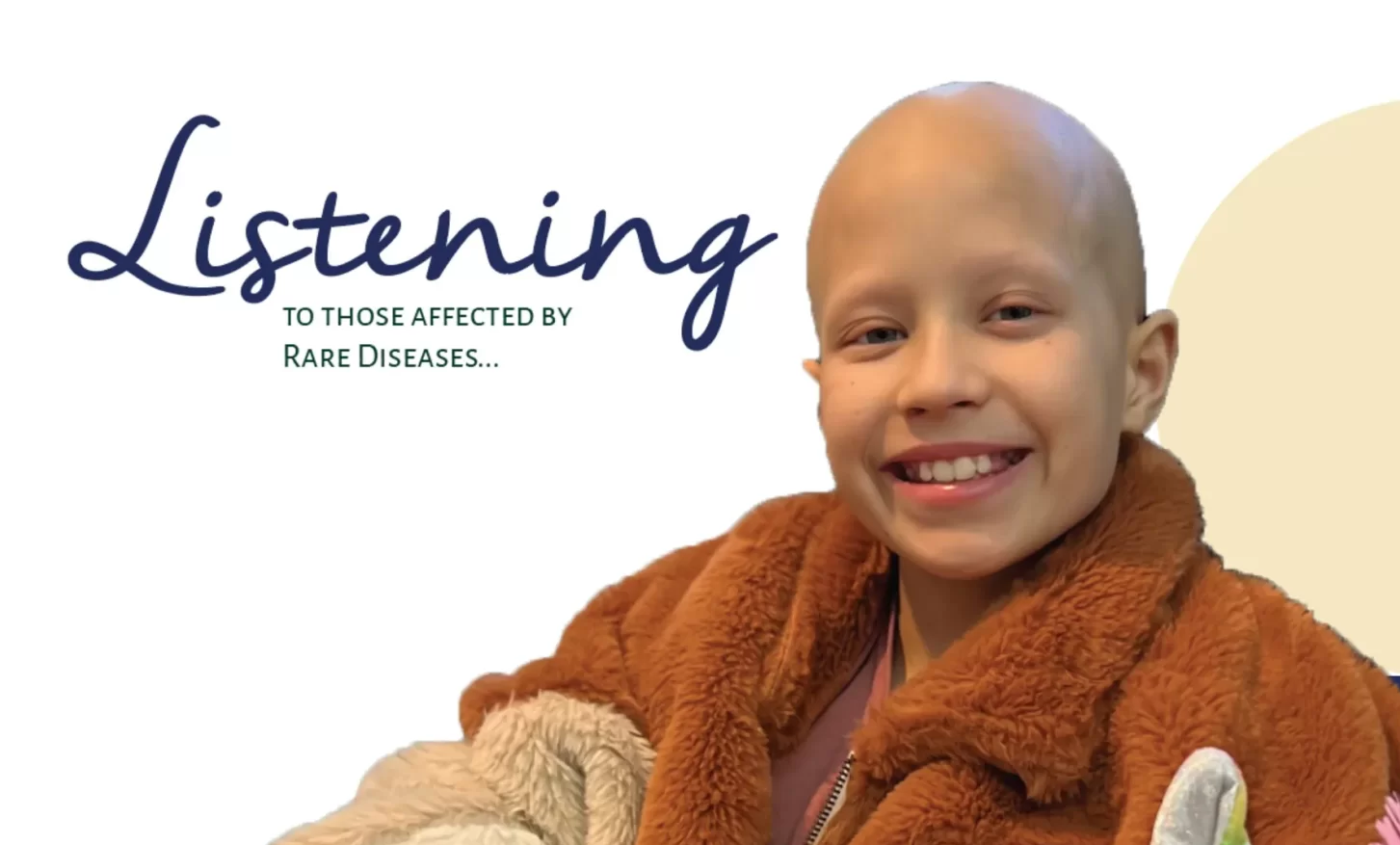
Before a council can fix anything, it has to listen. That sounds simple, and in rare disease it is unusually hard. There is no single rare disease constituency to survey. There are thousands of conditions, each affecting a handful of families, scattered across a state as vast as Nevada. The voices were always there. What they lacked was a way to be heard together.

What is the Nevada Rare Disease Needs Assessment?
The Nevada Rare Disease Needs Assessment is a multi-year study conducted by the Nevada Rare Disease Advisory Council (NV-RDAC) that combines patient and family survey responses, a statewide survey of health care professionals, and statewide clinical diagnosis data into one account of rare disease care in Nevada. It is observational by design. It documents what was reported, what was measured, and what the data shows, and it does not make policy recommendations. That work happens separately within the Council.
The Council was created by the Nevada Legislature in 2019 under Senate Bill 315 and is charged in statute with examining the incidence, causes, and economic burden of rare diseases in the state, and with reporting annually to the Governor and the Legislature. The Needs Assessment is how the Council builds the evidence base that work requires.
A rare disease is generally defined in the United States as a condition affecting fewer than 200,000 people. Individually uncommon and collectively enormous, more than 10,000 identified rare diseases affect an estimated 30 million Americans, roughly one in ten. That combination is exactly what makes a state-level picture so hard to assemble, and so valuable once it exists.
What did Nevada families report about getting a diagnosis?
We started with patients and families through our “While You Wait” Needs Assessment, offered in both English and Spanish, because a rare disease does not check which language you speak. Over two years, 508 Nevadans have responded.
What they told us is sobering. More than a third reported it took over a year to reach a diagnosis. One in seven waited more than five years, and this is a cohort whose average age is under four. These are children whose diagnostic odyssey has, in some cases, lasted longer than they have been alive.
Nearly 4 in 10 reported being misdiagnosed along the way. That finding tracks with the international research: a survey of more than 6,500 people living with rare diseases across 41 European countries found an average time to diagnosis of 4.7 years, and identified misdiagnosis as one of the strongest predictors of a longer wait. Behind each number is a family that spent a long time being told their experience was ordinary, or imagined, or somebody else’s problem.
As one parent put it, the work of holding it all together becomes its own job:
“I spend nearly forty hours a month on the phone with insurance and providers to get the bills paid and pre-authorizations approved. It has turned into a part-time job, which already includes being the main caregiver to my very ill child.”
What did Nevada providers report about rare disease care?
A family’s account is only half the picture. In August 2025 we launched our first statewide provider survey, and we deliberately reached beyond physicians to nurses, pharmacists, genetic counselors, social workers, and care coordinators, because every role sees a different part of the system’s failures. 69 Nevada professionals responded.
Their answers were striking in their consistency. They rated the availability of every category of rare disease specialty care below the midpoint of “available.” They reported that, on average, fewer than half of rare disease prior authorization requests are approved on the first try, and roughly 1 in 4 is ultimately denied. A majority said they spend more than half of their clinical time coordinating care rather than delivering it.
Nevada is not alone in that last experience, though rare disease sharpens it. The American Medical Association’s 2025 national survey found that physicians and their staff spend an average of 13 hours a week on prior authorization, that nearly one in three physicians report requests are often or always denied, and that 93% report the process delays patient care at least some of the time.
One Nevada provider summed up the strain plainly:
“The good outcomes I have are because I am willing to do the extra work without adequate reimbursement.”
Do Nevada providers support a rare disease Center of Excellence?
On one point, the alignment was remarkable. 82% of responding providers, across primary care, specialty care, nursing, pharmacy, genetics, and social work, supported establishing a comprehensive rare disease Center of Excellence in Nevada. Only one opposed. That degree of agreement among independent clinicians is unusual, and now it is documented.
The model has a national precedent. The National Organization for Rare Disorders launched its Rare Disease Centers of Excellence Network in 2021 to shorten diagnostic timelines, expand access to specialty care, and train more rare disease clinicians. As of July 2026 the network includes 49 designated centers across 28 states and the District of Columbia.
How does insurance type change rare disease care in Nevada?
When we put the data together, one pattern stood out above the rest. Access to care in Nevada looks very different depending on how you are insured.
Medicaid-insured families reported provider unfamiliarity with their condition at more than twice the rate of privately insured families, and long wait times at nearly twice the rate. Privately insured families reported care coordination breakdowns at twice the rate of Medicaid families. These are two distinct failure modes, and half of the families in this year’s cohort are Medicaid-insured. Any solution that addresses only one of these experiences will leave the other untouched.
The Medicaid pattern is consistent with what federal analysts have documented nationally. The Medicaid and CHIP Payment and Access Commission has reported that Medicaid enrollees have more difficulty than privately insured patients finding a specialist physician who will treat them. Nevada’s data shows what that looks like for families whose child’s condition may be one their local provider has never encountered.
How many Nevadans are living with a rare disease?
Alongside the surveys, statewide clinical data documented 4,302 unique Nevadans with rare disease diagnoses in 2025 alone, across 19 diagnostic categories.
That is not an abstraction. It is the scale of a population currently held together, as the data shows, largely by the personal effort of providers and the financial sacrifice of families. It is also a floor rather than a ceiling, because it counts only the Nevadans who have already reached a diagnosis. The families still waiting are, by definition, missing from that number.
What comes next, and when is the full report released?
These findings are preliminary. The patient and family data spans the first two years of collection and is, so far, overwhelmingly pediatric. The provider survey reflects only its first year.
The complete three-year report, including the adult and Northern Nevada voices we are working to reach, is expected in February 2027, timed to Nevada’s next legislative session. What we have already is an evidence base no one in Nevada has had before. What gets built on it is the work ahead.
To every family who answered our questions, and every provider who told us the truth about the system they work in: thank you. You helped write the record that will shape rare disease care in Nevada for years to come.
If you live with a rare disease in Nevada, or care for someone who does, your experience belongs in the next report. You can add your voice through the “While You Wait” Needs Assessment, and Council meetings are open to the public.