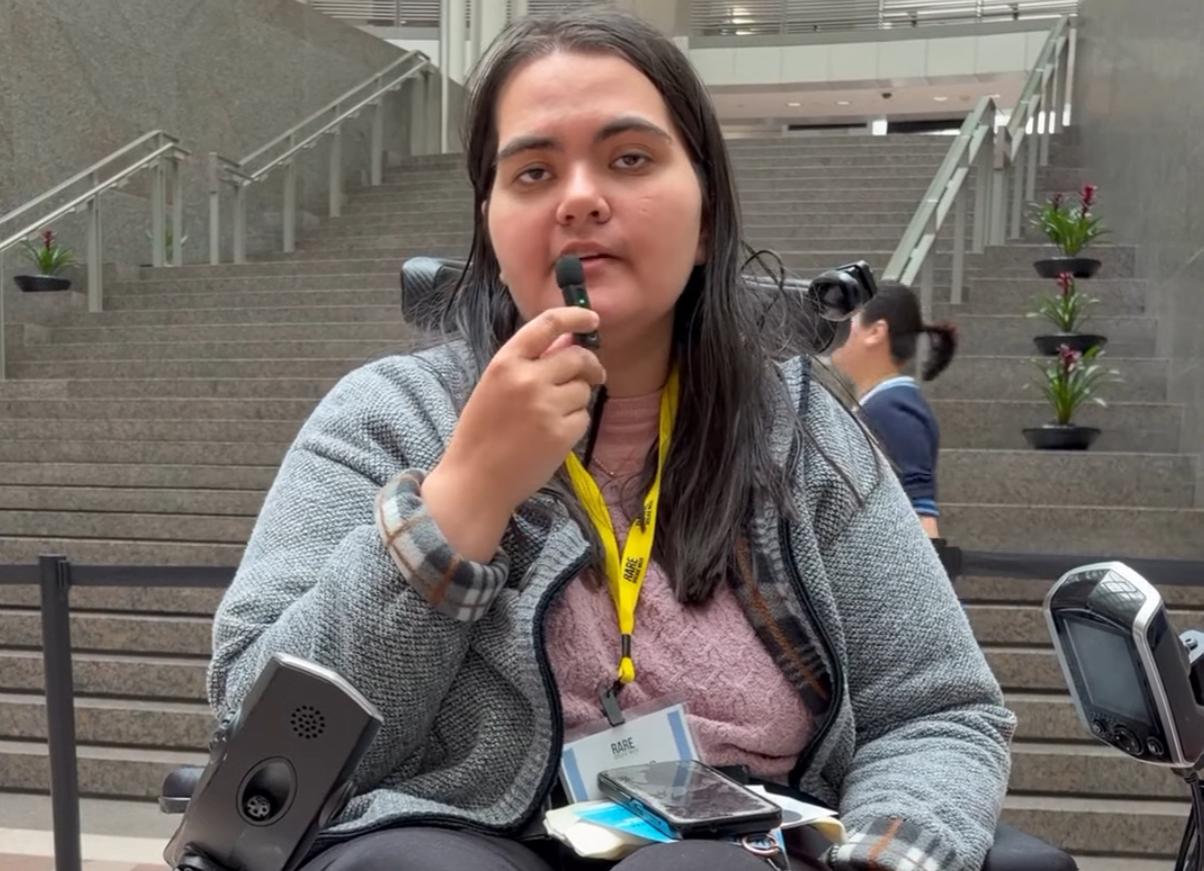
NV-RDAC Member Profile: Madison Bowe September 2026 | Member-by-Member Series
Madison Bowe was training to save lives when her own body gave her a warning.
She was in an Advanced Emergency Medical Technician class at her college, performing an intubation on a training mannequin, when her hand spasmed without warning. She had never felt anything like it. The spasm caused her to strike the mannequin’s teeth, and in that moment she made a decision that says everything about who she is: she put the patient first. She walked away from the career she had chosen rather than risk carrying an unexplained condition into someone’s worst moment.
What she couldn’t have known then was how long it would take for the medical system to return that same care to her.
Madison had lived with health challenges since birth. But as her symptoms escalated, the system treated what it couldn’t explain as something it could dismiss. At 21, she went to an emergency department for chest pain, a place she had been several times before. Instead of treatment, she was placed on a legal hold. No one told her directly that she was being accused of making herself sick. She learned later that she had been discharged with a diagnosis of Munchausen syndrome. She walked home on her walker. Her mother, who had watched her navigate illness her entire life, was never called to verify her medical history.
“I had to continue to fight for myself,” Madison says. “I had to believe that someone would help me.”
The diagnosis, when it finally came, came because she demanded it. After three emergency room visits in a matter of days, unable to move her legs out of her manual wheelchair, Madison told hospital staff: “If you do not help me, I will be back here again.” She was tested to rule out Guillain-Barré Syndrome, admitted, and seen by a neurologist who told her he believed she had Stiff Person Syndrome.
What she felt first was not fear. It was relief. Someone believed her.
What Is Stiff Person Syndrome?
Stiff Person Syndrome (SPS) is a rare autoimmune disorder of the central nervous system. The immune system produces antibodies that attack glutamic acid decarboxylase (GAD), an enzyme critical to producing GABA, the brain’s primary inhibitory neurotransmitter. Without enough GABA, the nervous system loses its ability to regulate muscle activity. The result is progressive rigidity, painful spasms that can be triggered by touch, sound, or stress, and, over time, serious impairment of mobility and daily function.
SPS is not just rare. It is routinely misdiagnosed. A majority of SPS patients are initially told they have a psychiatric condition. Spasms lasting hours may be dismissed as panic attacks. Rigidity that makes walking impossible may be attributed to psychosomatic causes. For patients like Madison, that pattern of dismissal is not a statistic. It is a lived experience with a name, a date, and a long walk home.
When Systems Don’t Talk to Each Other
Madison’s story is not only about a rare diagnosis. It is about what happens when fragmented systems meet a complex patient, and she has lived the most dangerous version of that gap.
During one crisis, her jaw and throat began to tighten and she struggled to breathe. She spent hours in a chair in the emergency department before being rushed to a higher-acuity room, red in the face, and intubated. In her assessment, the failures that day were not about any one clinician. They were about the handoff between pre-hospital care and the emergency department, the relay of information, and possibly the simple availability of beds. She believes that if effective treatment had started earlier, the intubation could have been avoided.
Madison now uses that experience as a teaching tool, advocating for more effective pre-hospital medicine protocols so that the next patient in that chair is recognized sooner.
From Patient to Advocate
Madison’s path into advocacy began, fittingly, with a conversation in a hospital. A nurse suggested she look into case management. That suggestion sparked something, and today Madison does case management work in her spare time, helping others navigate the systems she once had to fight alone.
She began sharing her story on social media, but the turning point came with her first Rare Across America with the EveryLife Foundation for Rare Diseases, when she became the first Nevadan to bring rare disease policy materials to Congressional District 1 during her representative’s time in office.
Her advocacy résumé has only deepened since. Madison is an alumna of the EveryLife Foundation’s Young Adult Representatives of Rare Diseases (YARR) program and a graduate of the YARR Leadership Academy and the YARR Speakers Bureau. She is a graduate of the Rare Disease Legislative Advocates (RDLA) 1:1 Mentorship Program, and she has paid that mentorship forward: offering informal guidance to friends in the rare disease community on telling their stories, and mentoring a child in Northern Nevada for Youth and Teen Advocacy Day. She recently participated in Rare Across America and traveled to Capitol Hill for Rare Disease Week with the EveryLife Foundation.
She also serves as an ambassador with the Chronic Disease Coalition and Patients Rising, is a member of the Rare Disease Diversity Coalition, volunteers with the Immunocompromised Association, and volunteers with NORD at the Nevada State Resource Center.
And she hasn’t left emergency services behind. Madison is studying fire science in college, with a focus on improving emergency response protocols for the disabled and rare disease communities: taking the field she once stepped away from and reshaping it from the advocacy side.
On the Nevada Rare Disease Advisory Council, Madison brings a perspective that is essential and often underrepresented: that of a young adult patient navigating fragmented systems in real time. She is committed to advancing policies that strengthen emergency response protocols for rare disease patients, reduce barriers to continuity of care, and improve the inclusivity of healthcare resources across Nevada.
What NV-RDAC Is Working to Change
The challenges Madison has experienced are the challenges NV-RDAC was created to address. Her voice on the council helps shape priorities grounded in the lived reality of navigating Nevada’s healthcare system with a rare disease:
Emergency care protocols for rare disease patients. The council advocates for standardized tools, including emergency care plans, patient checklists, and provider education resources, so that first responders and emergency physicians can treat rare disease patients safely even when they have never encountered the condition before.
Care coordination across providers and systems. NV-RDAC’s needs assessment data show that 74% of rare disease families in Nevada lack a care coordinator. For patients managing multiple conditions across different hospital systems, that gap translates directly into fragmented care, duplicated testing, and preventable emergency visits.
Trauma-informed approaches to rare disease care. The cumulative impact of diagnostic delays and medical dismissal creates trauma that compounds the disease itself. The council is working to elevate trauma-informed frameworks as a standard of care for every clinician a rare disease patient encounters.
“Madison represents exactly why patient voices belong on this council. She has lived the consequences of systems that don’t coordinate, providers who don’t communicate, and emergency departments that aren’t prepared for what they don’t understand. She’s taken that experience and turned it into action at the local, state, and national level. When we talk about making Nevada’s healthcare system work for rare disease patients, Madison isn’t speaking from theory. She’s speaking from the exam table, the waiting room, and the ER. That perspective is irreplaceable.”
— Annette Logan-Parker, Chair, Nevada Rare Disease Advisory Council
About Madison Bowe
Madison Bowe is a rare disease advocate, patient leader, case manager, and fire science student based in Las Vegas, Nevada. She lives with Stiff Person Syndrome, gastroparesis, and other rare comorbidities, and has transformed her experience into a mission to improve access, equity, and compassionate care for all Nevadans living with rare diseases.
Madison serves on the Nevada Rare Disease Advisory Council. She is an alumna of the EveryLife Foundation’s YARR program, a graduate of the YARR Leadership Academy, the YARR Speakers Bureau, and the RDLA 1:1 Mentorship Program, and a participant in Rare Across America and Rare Disease Week on Capitol Hill. She is an ambassador with the Chronic Disease Coalition and Patients Rising, a member of the Rare Disease Diversity Coalition, and a volunteer with the Immunocompromised Association and NORD’s Nevada State Resource Center.
The Nevada Rare Disease Advisory Council was established by the Nevada Legislature in 2019 (SB 315) to improve awareness, diagnosis, treatment, and support for Nevadans living with rare diseases. Learn more at nvrdac.org.